Persistent pelvic pain, heavy bleeding, infertility, recurrent cysts and suspected endometriosis can have very different causes, so the right operation depends on what is found and what must be preserved. You will be able to match common pelvic conditions with the laparoscopic procedures used for them, recognise when surgery is unsuitable and understand which questions to take to a specialist consultation.
Key takeaways
- Laparoscopy can treat endometriosis, fibroids, ovarian cysts, adhesions and ectopic pregnancy.
- Diagnostic laparoscopy identifies pelvic disease; operative laparoscopy treats it during the same procedure.
- Seek assessment for persistent pelvic pain, heavy bleeding, infertility or suspected endometriosis.
- Severe anaesthetic risk, extensive disease or unstable health can make laparoscopy unsuitable.
Which gynaecological problems can advanced laparoscopy treat?
Advanced laparoscopic surgery for gynaecological problems in Bangalore treats conditions inside the abdomen and pelvis, not every gynaecological disorder. It may be appropriate for:
- Endometriosis, including deep infiltrating endometriosis
- Pelvic adhesions and chronic pelvic pain
- Benign ovarian cysts and selected pelvic masses
- Selected fibroids
- Ectopic pregnancy and tubal disease
- Selected infertility-related conditions
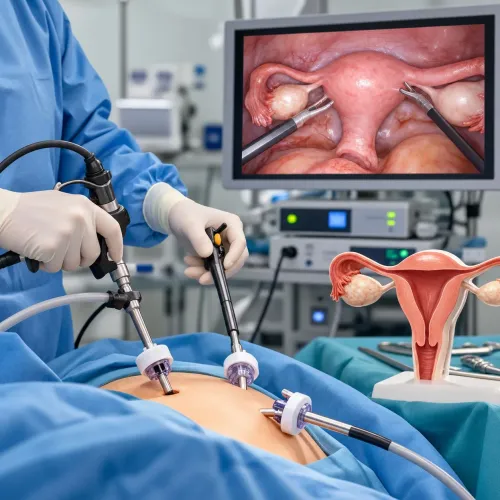
For many people, laparoscopic surgery for pelvic problems can diagnose and treat endometriosis during one operation. The surgeon may excise or ablate visible implants and divide adhesions in the same procedure. Disease involving the bowel, bladder, ureter or extensive pelvic structures may require colorectal or urological input.
Pain can persist or recur after endometriosis or adhesion surgery.
These procedures are not interchangeable:
| Procedure | What it does | Main use |
|---|---|---|
| Cystectomy | Removes an ovarian cyst | A suitable benign cyst |
| Salpingectomy | Removes a fallopian tube | Damaged tube or selected ectopic pregnancy |
| Salpingotomy | Opens a tube to remove an ectopic pregnancy | Selected unruptured ectopic pregnancy |
| Adhesiolysis | Divides scar tissue | Pelvic adhesions |
| Endometriosis excision | Removes visible implants | Endometriosis |
| Myomectomy | Removes fibroids while retaining the uterus | Selected fertility-preserving fibroid surgery |
| Hysterectomy | Removes the uterus | Conditions requiring uterine removal |
Cystectomy can affect ovarian reserve, especially for endometriomas or repeated surgery. Laparoscopic myomectomy is not suitable for every fibroid size, number or location, and selected infertility cases need comparison with assisted reproduction.
What is the difference between diagnostic and operative laparoscopy?
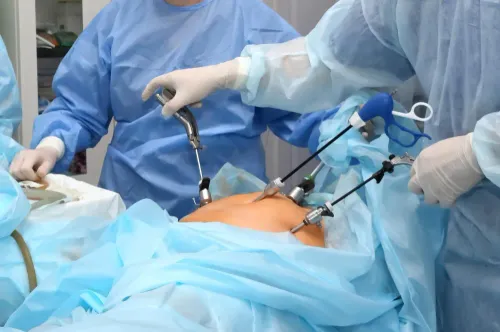
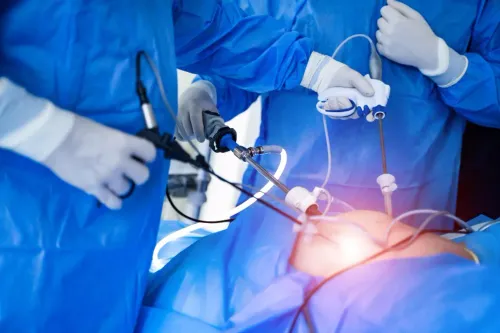
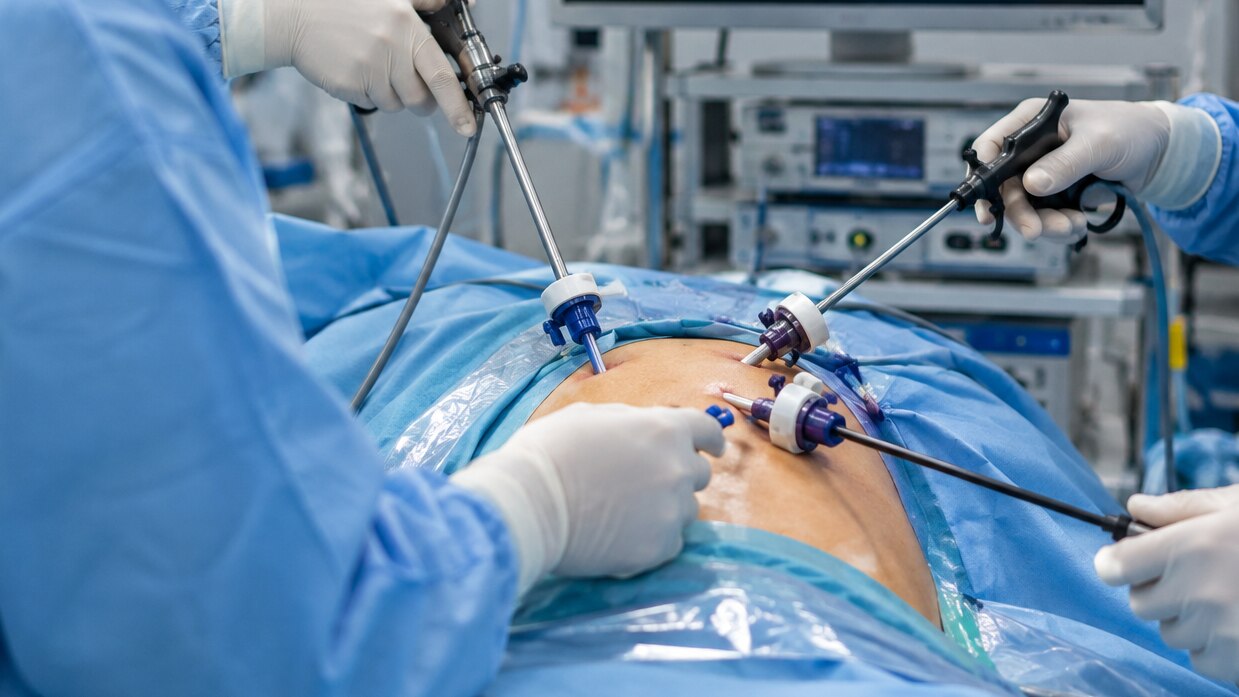
Diagnostic laparoscopy answers “what is causing this?” A surgeon passes a camera through a small abdominal incision, usually under general anaesthesia, to inspect the uterus, ovaries, fallopian tubes, pelvic lining, bowel surface, bladder area and visible endometriosis, adhesions or pelvic masses. It does not replace cervical screening, endometrial sampling or cancer assessment.
| Procedure | What happens | What can be treated |
|---|---|---|
| Diagnostic laparoscopy | Camera inspection through one small incision | Identifies visible pelvic disease and guides the next step |
| Operative laparoscopy | Instruments enter through additional small incisions | Removes a selected ectopic pregnancy or cyst, excises endometriosis, divides adhesions, repairs selected tubal disease or removes selected fibroids |
Ask whether the consent includes treatment of findings discovered during inspection. The plan may need to change, tissue may need laboratory testing, and the surgeon may need to convert to open abdominal surgery for safe bleeding control, difficult anatomy or cancer concern.
A laparoscopic gynaecology specialist will discuss serious risks, including bleeding, infection, bowel, bladder, ureter or blood-vessel injury, anaesthetic complications and venous thromboembolism. Adhesiolysis can injure nearby organs, and adhesions or pain can return.
Small incisions do not guarantee an effortless recovery. Carbon-dioxide gas can cause shoulder pain, fatigue can last beyond discharge, and an overnight stay may be necessary after extensive surgery.
Which symptoms justify an assessment for laparoscopic surgery?
Persistent or returning pelvic pain warrants a gynaecological surgical assessment, especially when it limits work, sleep or exercise. Do not keep self-managing if you also have:
- Pain during sex
- Heavy or prolonged menstrual bleeding
- Pelvic pressure or a palpable fullness
- Recurrent ovarian cysts
- Difficulty becoming pregnant
- Symptoms suggesting endometriosis, such as cyclical bowel, bladder or pelvic pain
- Symptoms suggesting tubal disease, including infertility or previous pelvic infection
Assessment usually begins with your symptom pattern, a pelvic examination where appropriate, a pregnancy test when relevant, blood tests and a pelvic ultrasound. MRI can define deep endometriosis, show a fibroid’s position or clarify a complex pelvic mass. Laparoscopy does not replace cervical screening, endometrial sampling or cancer-focused evaluation.
The best next step depends on the finding:
| Option | What it means | When it applies |
|---|---|---|
| Observation and repeat imaging | Monitor rather than operate | A simple ovarian cyst is improving and has reassuring ultrasound features |
| Medication | Treat pain, bleeding or endometriosis without surgery | Symptoms respond and no urgent structural problem is present |
| Hysteroscopy | Inspect or treat the uterine cavity | Suspected polyps, submucosal fibroids or abnormal endometrial tissue |
| Uterine artery embolisation | Reduce blood flow to selected fibroids | Fibroid symptoms need treatment and preserving the uterus is important |
| Assisted reproduction | Bypass or support tubal and ovarian factors | Surgery alone is unlikely to improve fertility |
A suspicious or very large mass needs cancer-focused assessment, not routine minimally invasive gynaecological surgery or simple cyst removal.
How do doctors decide whether laparoscopy is the right route?
The route is chosen from the scan, the disease pattern and your safety—not from incision size alone. Ultrasound or MRI findings, cyst size and appearance, fibroid number and depth, suspected cancer, previous abdominal operations, dense adhesions, disease severity and anaesthetic fitness all matter.
| Route | What it offers | When it may fit |
|---|---|---|
| Laparoscopic | Small abdominal incisions, direct pelvic treatment and usually faster recovery | Suitable anatomy, benign-appearing disease and a patient fit for general anaesthesia |
| Open abdominal | Wider access and control of bleeding or complex anatomy | Very large masses, multiple deep fibroids, dense adhesions or suspected cancer |
| Vaginal | No abdominal incision | Selected hysterectomy cases when uterine size, disease and pelvic anatomy allow it |
| Robotic-assisted | More instrument articulation and three-dimensional visualisation | Complex pelvic surgery where available and appropriate; it remains major surgery |
Fertility plans change the decision. Selected myomectomy or ectopic and tubal procedures can retain the uterus, but ovarian tissue needs careful handling: cystectomy, particularly for an endometrioma or after repeated surgery, can reduce ovarian reserve. Tubal surgery must be weighed against the other tube’s condition, future ectopic risk, ovarian reserve, partner-related fertility factors and IVF.
A laparoscopic gynaecology specialist should compare expected recovery, tissue testing and the possibility of conversion to open surgery. Dr Rajani Vaidya can help structure that discussion around whether advanced laparoscopic surgery in Bangalore offers the safest route for your anatomy and reproductive goals.
Related services
Advanced Laparoscopic Surgeries Advanced Laparoscopic Surgeries Expert Minimally Invasive Surgical Care by Dr. Rajani Vaidya When it comes to surgical solutions for gynaecological conditions, patients today seek... View service → |
Laparoscopic Hysterectomy Dr. Rajani Vaidya, a leading Gynaecologist and Laparoscopic Surgeon, offers expertise in performing laparoscopic hysterectomy, a minimally invasive... View service → |
When is advanced laparoscopy unsuitable or unsafe?
A very large pelvic mass, suspicious ovarian malignancy, extensive adhesions, complex anatomy or a need for formal cancer staging can make routine laparoscopy the wrong route. Refer suspected cancer to a gynaecological oncology team; bowel, bladder or ureter endometriosis may need a gynaecologist working with colorectal or urological surgeons.
A ruptured ectopic pregnancy with major internal bleeding or haemodynamic instability needs resuscitation and immediate bleeding control. Laparoscopy is not a substitute for emergency treatment.
Conversion to an open abdominal operation is a safety decision, not proof that the procedure failed. Reasons include:
- Uncontrolled bleeding
- Dense scar tissue hiding important structures
- Unexpected anatomy
- A mass that cannot be removed safely through small incisions
- Findings that raise concern about cancer
The route changes the recovery experience, but none makes complex surgery minor.
| Route | Main advantage | Important limitation |
|---|---|---|
| Laparoscopic | Smaller incisions, often less pain and a shorter hospital stay | Gas-related shoulder pain, fatigue and activity restrictions remain; complex cases can need overnight recovery |
| Open abdominal | Wide access for very large masses, severe adhesions or cancer surgery | More wound discomfort and a longer recovery |
| Vaginal | Avoids abdominal incisions for selected hysterectomies | Not suitable for every uterine size, anatomy or disease pattern |
| Robotic-assisted | Precise instrument control for selected complex operations | Still major surgery, with access, anaesthetic and recovery considerations similar to laparoscopy |
Frequently asked questions
Which gynaecological problems can advanced laparoscopy treat?
Advanced laparoscopy can treat endometriosis, ovarian cysts, uterine fibroids, pelvic adhesions, ectopic pregnancy and some causes of infertility. The suitable procedure depends on the condition, its location and its extent.
What is the difference between diagnostic and operative laparoscopy?
Diagnostic laparoscopy uses a camera to inspect the abdomen and pelvis and identify conditions such as endometriosis or adhesions. Operative laparoscopy uses instruments through additional small incisions to remove, repair or treat the problem during the procedure.
Which symptoms justify an assessment for laparoscopic surgery?
Arrange an assessment for persistent or severe pelvic pain, painful periods, pain during sex, heavy or irregular bleeding, infertility, a suspected ovarian cyst or symptoms suggesting endometriosis. Sudden severe pain, fainting or heavy bleeding requires urgent medical care.
How do doctors decide whether laparoscopy is the right route?
Doctors consider your symptoms, examination, ultrasound or MRI findings, previous operations, general health, fertility plans and the suspected condition. They compare laparoscopy with medication, hysteroscopy, vaginal surgery, open surgery or observation.
When is advanced laparoscopy unsuitable or unsafe?
Laparoscopy may be unsuitable when you cannot safely undergo general anaesthesia, have severe heart or lung disease, uncontrolled bleeding problems, unstable health or extensive disease requiring open access. Your surgeon also considers previous abdominal surgery and the risk of injury to nearby organs.
Related services
Laparoscopic Myomectomy Dr. Rajani Vaidya, an experienced Gynaecologist and Laparoscopic Surgeon, specializes in performing laparoscopic myomectomy, a minimally invasive... View service → |
Fertility-Enhancing Endoscopic Surgery Fertility-Enhancing Endoscopic Surgery For couples facing the challenges of infertility, advanced medical techniques now offer renewed hope. View service → |
Laparoscopic Ovarian Cyst Removal Laparoscopic Ovarian Cyst Removal Ovarian cysts are fluid-filled sacs that develop on or inside an ovary. View service → |
Vaginal Hysterectomy + Pelvic Floor Repair Vaginal Hysterectomy + Pelvic Floor Repair Many women experience pelvic health issues such as uterine prolapse, urinary incontinence, or vaginal laxity—often due to childbirth, aging, or... View service → |
Keywords