Surgery improves pregnancy chances when it corrects a specific problem, such as a blocked tube, cavity-distorting fibroid, hydrosalpinx, endometriosis or pelvic adhesions. The right choice depends on whether the goal is natural conception, better embryo transfer, or preservation of future reproductive options, and on whether surgery would delay a more effective treatment.
Key takeaways
- Surgery helps when a correctable anatomical problem blocks conception or embryo transfer.
- Check tubal patency, ovarian reserve, ovulation, semen analysis and uterine anatomy first.
- Hydrosalpinx, adhesions and selected fibroids can require different treatment strategies.
- Compare surgery with IVF by age, diagnosis, ovarian reserve, sperm factors and time available.
What operations are included in fertility-enhancing surgery?
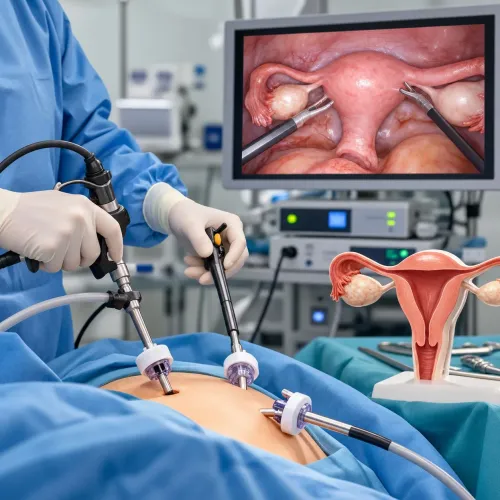
Fertility-enhancing surgery treats an anatomical problem that interferes with conception or embryo transfer; it is not one standard operation. Fertility enhancing surgery in Bangalore may address blocked tubes, endometriosis, pelvic adhesions, uterine polyps, selected fibroids, hydrosalpinx or ovarian cysts after assessment of ovulation, ovarian reserve, semen analysis, tubal patency and uterine anatomy.
Operations commonly included are:
- Diagnostic laparoscopy, with treatment during the same procedure when appropriate
- Tubal cannulation for a blockage near the uterine end of a fallopian tube
- Adhesiolysis to divide pelvic scar tissue
- Excision of endometriosis
- Ovarian cystectomy when a selected cyst affects fertility or requires diagnosis
- Hydrosalpinx treatment, including removal or separation of the damaged tube
- Hysteroscopic removal of an endometrial polyp or submucosal fibroid
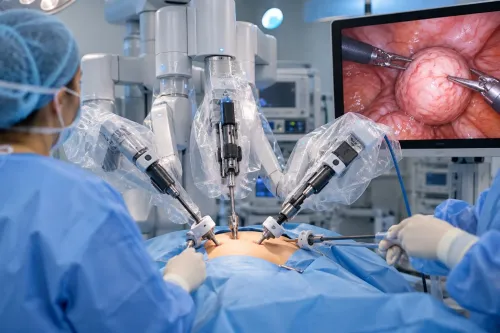
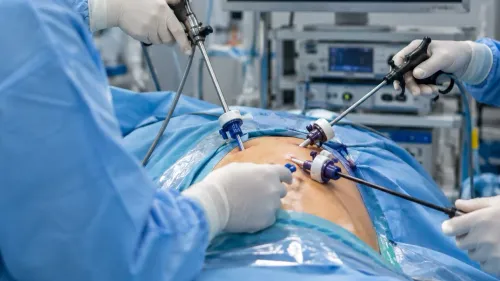
Laparoscopy and hysteroscopy answer different clinical questions. Endoscopic fertility surgery in Bangalore can involve either technique, but they are not interchangeable.
| Approach | What the surgeon sees | Typical fertility use |
|---|---|---|
| Laparoscopy | The pelvis and abdominal reproductive organs through small abdominal incisions | Endometriosis, adhesions, tubal disease, hydrosalpinx and selected ovarian conditions |
| Hysteroscopy | The uterine cavity through the vagina and cervix, without abdominal incisions | Polyps, submucosal fibroids, scar tissue and some cavity abnormalities |
A diagnostic laparoscopy is not a routine first-line test for unexplained infertility; symptoms, examination or imaging should indicate a likely treatable pelvic problem.
Which test findings justify surgery rather than observation or IVF?
Surgery is justified when a test shows a treatable anatomical problem and the likely gain outweighs surgical risk and delay to IVF. An abnormal image alone is not enough; the finding must match your symptoms, ovarian reserve, semen analysis, age and time available for treatment.
| Test | Finding | How it guides the decision |
|---|---|---|
| Ultrasound | Hydrosalpinx, endometrioma, submucosal fibroid, polyp or significant pelvic mass | Supports surgery when the lesion distorts the cavity, damages the tube, causes symptoms or threatens ovarian tissue |
| Hysterosalpingography | Proximal blockage, distal blockage, spill abnormality or hydrosalpinx | Tubal cannulation can suit an isolated proximal blockage; extensive or distal damage often favours IVF or hydrosalpinx treatment |
| Saline sonography | Polyp, cavity fibroid, scar tissue or an irregular uterine cavity | Supports hysteroscopic treatment when the lesion projects into the cavity; a normal cavity favours observation or other treatment |
| MRI | Deep endometriosis, adenomyosis, large fibroid or complex pelvic anatomy | Helps map disease before surgery and prevents operating on a lesion unlikely to improve fertility |
| Diagnostic hysteroscopy | Directly confirms a polyp, submucosal fibroid, septum or adhesions | Strongest evidence for hysteroscopic correction because diagnosis and treatment can occur in one procedure |
Observation is reasonable for a small, symptom-free lesion that does not distort the uterine cavity or threaten the tubes and ovaries. IVF may be more efficient with severe tubal damage, low ovarian reserve or late reproductive age; fertility enhancing surgery in bangalore should not delay assisted reproduction without a time-based plan.
How can surgery improve pregnancy chances for different conditions?
Surgery improves pregnancy chances when it corrects a specific barrier rather than treating unexplained infertility. The outcome depends on age, ovulation, ovarian reserve, semen analysis, remaining tubal function and how long you have been trying.
- Tubal cannulation or repair can restore natural conception when a blockage is short, accessible and located near the uterus, with a healthy tube beyond it. Extensive damage raises ectopic-pregnancy risk and often favours IVF.
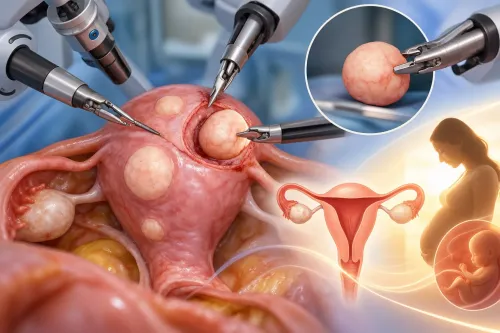
- Hydrosalpinx treatment, through salpingectomy or proximal tubal occlusion, can improve implantation and live-birth prospects after embryo transfer when the fluid-filled tube communicates with the uterus. It does not restore natural fertility and requires careful planning if ovarian reserve or surgical access is a concern.
- Endometriosis excision can help natural conception when visible disease causes pain, distorted pelvic anatomy or impaired access to the ovary and tube. Surgery cannot reliably prevent recurrence and extensive ovarian surgery can reduce ovarian reserve.
- Adhesiolysis can improve natural conception when scar tissue fixes the ovary, blocks the tube or distorts pelvic anatomy. New adhesions can form after surgery.
- Hysteroscopic polyp removal or submucosal fibroid removal can improve implantation by restoring the uterine cavity. This is an example of endoscopic fertility surgery in Bangalore: the surgeon enters through the vagina and cervix, not abdominal incisions.
- Ovarian cystectomy helps when a selected cyst interferes with ovulation, access to follicles or pelvic anatomy; removing an endometrioma can reduce ovarian reserve.
These fertility surgery benefits must be weighed against bleeding, infection, organ injury and the possibility that IVF will still be needed.
What fertility surgery benefits are realistic, and what are the limits?
Successful surgery can repair an anatomical obstacle, but it cannot correct every infertility cause. The main fertility surgery benefits are condition-specific: restoring passage through a fallopian tube, clearing a distorted uterine cavity, releasing adhesions, treating selected endometriosis, or retaining healthy ovarian and uterine tissue.
| Option | What surgery can repair or preserve | What remains after surgery |
|---|---|---|
| Tubal repair or cannulation | Opens a selected blockage and restores a route for sperm and egg | Tubal scarring can recur; ectopic pregnancy risk remains |
| Hydrosalpinx treatment | Removes or blocks a fluid-filled damaged tube before conception or embryo transfer | The other tube, ovarian reserve and embryo quality still determine success |
| Adhesiolysis or endometriosis excision | Frees stuck pelvic organs and removes visible disease | Pain or endometriosis can return; bowel, bladder or ureter injury is possible |
| Polyp or submucosal fibroid removal | Restores the uterine cavity for implantation | Fibroids can recur, and surgery can cause bleeding or adhesions |
| Ovarian cystectomy | Removes a selected cyst while retaining the ovary | Surgical damage can reduce ovarian reserve |
| Fertility-preserving surgery | Retains the uterus, ovary or reproductive tissue | Preserving an organ does not preserve egg number, egg quality or fertility automatically |
Fertility preserving surgery in Bangalore has the same limits as anywhere else: age, ovarian reserve, ovulation, sperm health and genetic factors still matter. Surgery can also delay IVF; that delay may reduce available oocytes, especially with low reserve or later reproductive age.
A plan may therefore require surgery first, IVF first, or egg, embryo or ovarian-tissue preservation before treatment.
How should you choose between surgery, IVF and fertility preservation in Bangalore?
Age, ovarian reserve, ovulation, semen analysis, tubal patency and uterine anatomy should guide the decision—not an ultrasound finding alone. A fertility specialist surgeon in Bangalore should also review pain, suspected endometriosis, previous pelvic surgery, hydrosalpinx, infertility duration and how quickly treatment must begin. Diagnostic laparoscopy is not a routine first test for unexplained infertility.
| Option | Best fit | Main trade-off |
|---|---|---|
| Surgery first | A polyp, submucosal fibroid, adhesions, distorted endometriosis anatomy or communicating hydrosalpinx is limiting conception or embryo transfer | Recovery delays IVF; ovarian surgery can reduce reserve |
| IVF first | Low ovarian reserve, older reproductive age, severe male-factor infertility, bilateral tubal blockage or limited time makes delay costly | IVF does not correct a diseased uterine cavity or hydrosalpinx |
| Fertility preservation | Surgery may threaten ovarian tissue, or pregnancy must be postponed while reserve remains usable | Egg freezing does not treat endometriosis, blocked tubes or uterine disease |
Ask how each finding changes the plan:
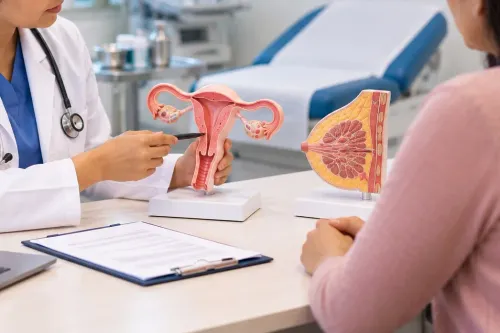
- Hysteroscopy addresses the cavity through the vagina and cervix, while laparoscopy enters the abdomen to assess tubes, ovaries and pelvic adhesions.
- Before removing an endometrioma, ask whether the reason is pain, suspected malignancy, follicle access or distorted anatomy; bilateral or repeat surgery carries greater reserve risk.
- With a communicating hydrosalpinx, ask whether salpingectomy or proximal occlusion before IVF is safer than attempting tubal repair.
Dr Rajani vaidya should be able to explain the expected gain, delay and reserve cost of each route, including fertility preserving surgery in Bangalore when ovarian tissue is at risk.
Related services
Fertility-Enhancing Endoscopic Surgery Fertility-Enhancing Endoscopic Surgery For couples facing the challenges of infertility, advanced medical techniques now offer renewed hope. View service → |
Laparoscopic Myomectomy Dr. Rajani Vaidya, an experienced Gynaecologist and Laparoscopic Surgeon, specializes in performing laparoscopic myomectomy, a minimally invasive... View service → |
Frequently asked questions
What operations are included in fertility-enhancing surgery?
Procedures include hysteroscopic removal of polyps or selected fibroids, laparoscopic treatment of endometriosis and adhesions, tubal surgery, hydrosalpinx treatment and selected ovarian cyst surgery.
Which test findings justify surgery rather than observation or IVF?
Surgery becomes more relevant when imaging, hysteroscopy or laparoscopy identifies a correctable problem such as a blocked tube, hydrosalpinx, significant adhesions, a uterine polyp or a cavity-distorting fibroid. Age, ovarian reserve, ovulation, semen analysis and the other tube also affect the choice.
How can surgery improve pregnancy chances for different conditions?
Removing a uterine polyp or cavity-distorting fibroid can improve the uterine environment. Treating endometriosis or adhesions can restore pelvic anatomy. Treating hydrosalpinx prevents fluid from reaching the uterus during embryo transfer; tubal surgery can restore natural conception in selected cases.
What fertility surgery benefits are realistic, and what are the limits?
Benefits depend on the diagnosis and may include natural conception, improved access to the ovary or a better embryo-transfer environment. Surgery cannot reverse reduced ovarian reserve, correct all sperm problems or guarantee pregnancy, and some procedures can create scarring or delay treatment.
How should you choose between surgery, IVF and fertility preservation in Bangalore?
Choose after reviewing the diagnosis, age, ovarian reserve, sperm results, tubal status, previous treatment and time available. Surgery suits a correctable anatomical problem; IVF may be faster when tubal, sperm or ovarian factors are substantial; fertility preservation protects future options when pregnancy is being delayed.
Keywords