Choosing fibroid surgery for future pregnancy requires more than measuring the largest fibroid. You will be able to match the fibroid’s FIGO type, uterine-cavity effect and fertility assessment with the right treatment, then ask precise questions about surgical technique, tissue removal, recovery and pregnancy planning.
Key takeaways
- Review fibroid number, size, depth and cavity relationship before choosing surgery.
- Request pelvic MRI when ultrasound does not show a complete surgical map.
- Ask how the surgeon will repair the uterine wall after fibroid removal.
- Discuss your conception timeline and pregnancy monitoring before scheduling surgery.
Is robotic myomectomy suitable for your fibroid pattern and fertility plans?
Suitability depends on the fibroid map and your fertility timeline, not the largest diameter alone. Ultrasound should record the number, size, position, depth within the uterine wall and relationship to the endometrial cavity. If ultrasound leaves the anatomy unclear or shows a complex fibroid burden, pelvic MRI provides a more complete surgical map.
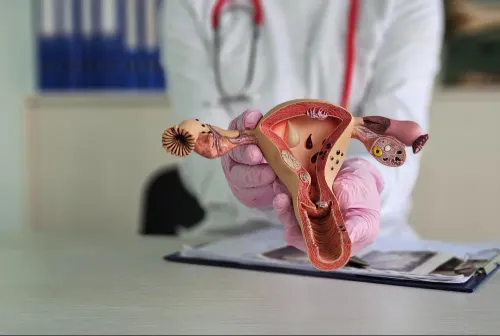
- Classify each fibroid using FIGO types 0–2 for submucosal fibroids, 3–5 for intramural or transmural fibroids, and 6–7 for subserosal or pedunculated fibroids.
- Check whether the fibroid indents or distorts the endometrial cavity. That distortion can interfere with implantation and is associated with miscarriage risk in selected patients.
- Match the location to the procedure. A cavity-projecting FIGO 0–2 fibroid may suit hysteroscopic removal, while deep wall or outer-surface fibroids may suit robotic or conventional laparoscopy.
- Decide whether removal is likely to help. Removing every visible fibroid is not automatically beneficial for conception and can create more uterine scars or adhesions.
Fertility planning must run alongside the surgical decision. Assess age, ovarian reserve, ovulation, tubal patency, semen analysis and other causes such as endometriosis; do not postpone this evaluation while waiting to choose an operation.
Fertility preserving fibroid surgery in Bangalore deserves consideration when cavity distortion, significant symptoms or fibroid anatomy threatens reproductive plans. Robotic myomectomy in Bangalore is not a guarantee of pregnancy, so the complete fertility picture matters before surgery.
What happens during robotic myomectomy, from abdominal entry to uterine repair?
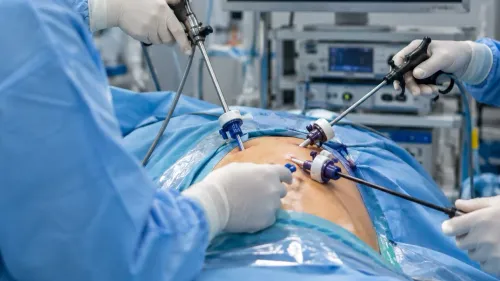
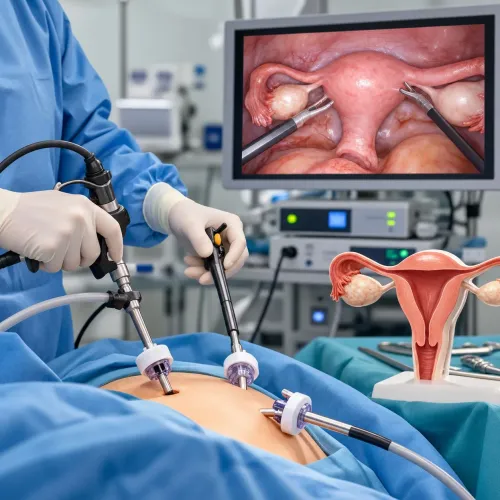
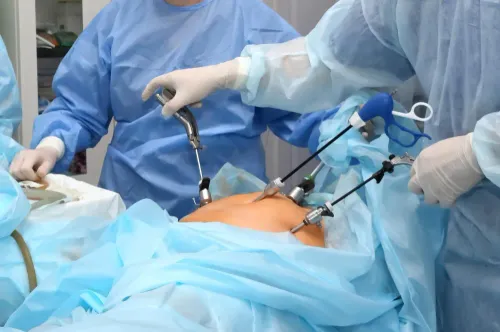
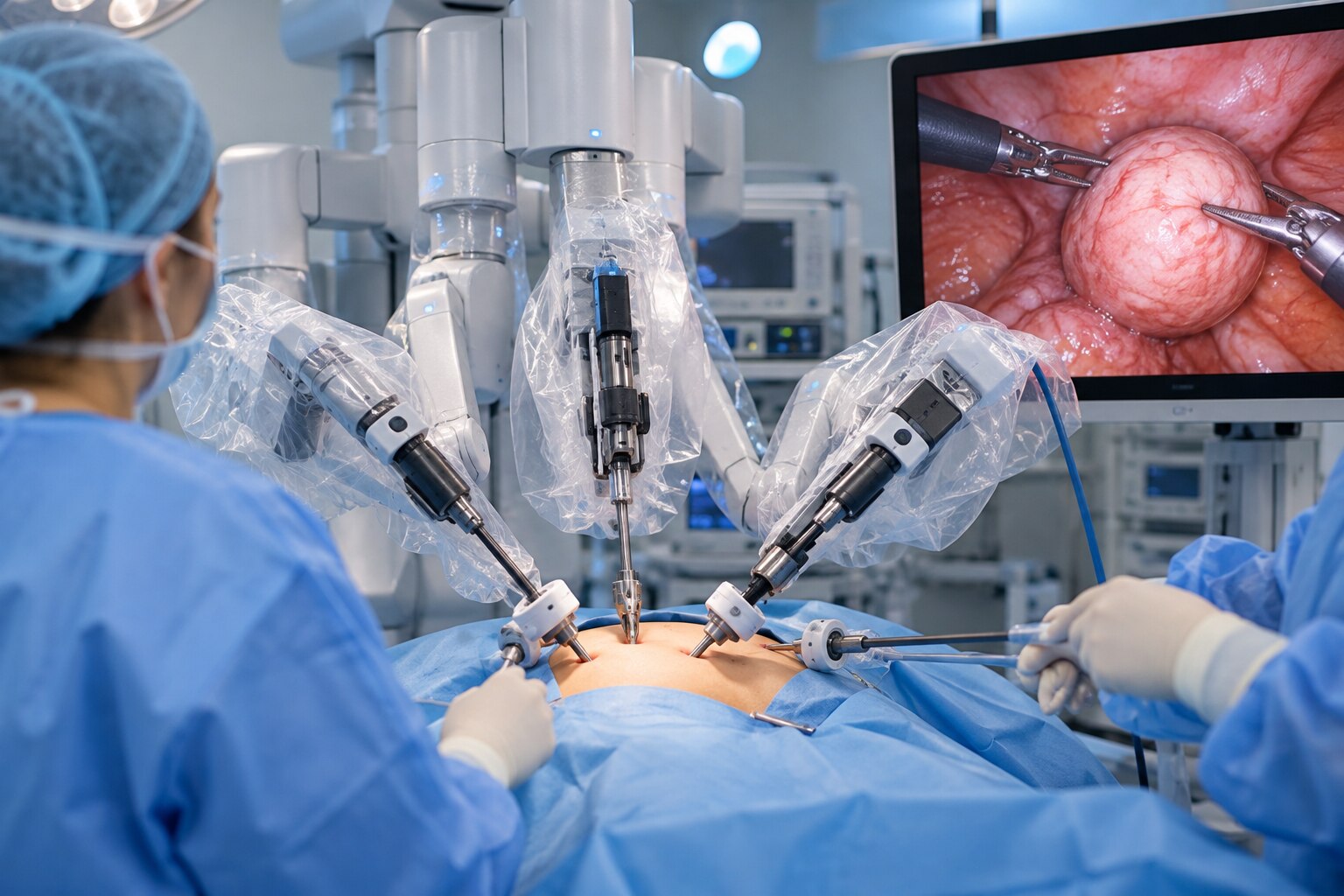
After general anaesthesia, the surgeon makes several small abdominal incisions and places a camera and robotic instruments through them. The robot does not operate autonomously: the surgeon controls every movement from the console.
In robotic fibroid surgery in Bangalore, the surgeon dissects each fibroid from the uterine muscle, controls bleeding, removes the fibroid and repairs the uterine wall.
Fertility-relevant decisions during the operation include:
- Enter the uterine wall through the fewest, safest incisions needed; unnecessary cuts create additional scars.
- Note whether dissection opened the endometrial cavity, because cavity entry affects healing advice and future pregnancy planning.
- Close deep or multiple defects with layered myometrial sutures, restoring muscle depth rather than closing only the surface.
- Check haemostasis before finishing. Persistent bleeding can require additional sutures, medicines or conversion to open surgery.
- Handle tissue gently, limit cautery and use an adhesion-prevention measure when appropriate. The product and closure method vary between hospitals.
Tissue extraction is a separate safety decision in robotic gynecological surgery in Bangalore:
| Method | Practical implication |
|---|---|
| Contained morcellation | Breaks the fibroid inside a containment system; it reduces, but does not eliminate, fragment spread. |
| Mini-laparotomy | Uses a small larger incision to remove tissue without power morcellation. |
| Enlarged incision | Removes the fibroid through a widened port or abdominal incision, with more wound impact. |
Power morcellation is unsuitable when malignancy is suspected. FDA warnings advise avoiding it in postmenopausal patients, patients over 50, and those suitable for en-bloc vaginal or mini-laparotomy removal; discuss patient-specific selection and containment with the surgeon.
How does robotic surgery compare with the other fibroid treatments?
Robotic fibroid surgery in Bangalore is not automatically the best fertility-preserving choice. It uses small abdominal incisions like conventional laparoscopy, but wristed instruments can improve articulation and surgeon ergonomics. The trade-off is commonly higher equipment cost and longer operating-room time, with no established universal fertility advantage.
| Option | What it means | When it applies |
|---|---|---|
| Robotic myomectomy | Surgeon-controlled removal through small abdominal incisions | Suitable fibroid size, number, location and uterine anatomy |
| Conventional laparoscopy | Similar access without wristed robotic instruments | Wall or outer-surface fibroids within technical limits |
| Open myomectomy | Abdominal incision providing direct access and bleeding control | Very large, numerous or technically difficult fibroids |
| Hysteroscopic myomectomy | Removal through the cervix from inside the uterine cavity | Selected FIGO 0–2 submucosal fibroids; often preferable to abdominal surgery |
| GnRH agonist | Temporarily shrinks fibroids or improves anaemia | Short-term preparation; it does not remove fibroids, and symptoms can return after stopping |
| Uterine artery embolisation or radiofrequency ablation | Non-excisional fibroid treatment | Requires separate counselling when future pregnancy matters because reproductive outcomes and pregnancy risks differ |
Robotic gynecological surgery in Bangalore is a poor fit when malignancy is suspected, a cavity fibroid is better treated hysteroscopically, the fibroid burden is extensive, or you need a non-surgical approach. A fertility plan also requires counselling about age, ovulation, tubes, semen parameters and endometriosis; removing fibroids does not guarantee pregnancy.
What can you expect for conception, pregnancy and recovery after surgery?
Removing a fibroid that distorts the uterine cavity can improve the mechanical conditions for implantation in selected patients. It cannot guarantee conception: age, ovulation, tubal patency, semen parameters, endometriosis and ovarian reserve still matter. Do not postpone fertility evaluation while deciding about surgery.
Myomectomy targets fibroids and the uterine wall, not the ovaries; the aim is to retain the uterus. Rarely, uncontrolled bleeding requires emergency hysterectomy. Other risks include transfusion, infection, bowel, bladder, ureter or blood-vessel injury, adhesions, incomplete removal, recurrence, anaesthetic complications, thrombosis and conversion to open surgery.
1. Plan the recovery interval with your surgeon. Many clinicians advise waiting about 3–6 months before trying to conceive, but incision depth, the number of repairs, entry into the cavity and healing findings matter more than a universal deadline.
2. Discuss pregnancy after fertility preserving fibroid surgery in Bangalore as a scar-management decision. Rare uterine rupture or dehiscence can occur, with risk influenced by cavity entry, incision depth, number of incisions and closure technique.
3. Agree on delivery planning during antenatal care. Your scar details may influence monitoring and the timing or mode of birth; neither vaginal birth nor caesarean birth can be promised in advance.
Recovery after robotic myomectomy in Bangalore also includes follow-up for pain, bleeding, fever and wound problems. Ask when imaging, exercise and intercourse are appropriate before leaving hospital.
Which questions should you ask a robotic myomectomy surgeon in Bangalore?
Ask for a written plan, not just a recommendation. Your consultation with a robotic myomectomy surgeon in Bangalore should answer:
- Can you show me the fibroid map, including each FIGO type (0–2 submucosal, 3–5 intramural or transmural, and 6–7 subserosal or pedunculated), size, depth, cavity distortion and distance from the endometrium?
- Is ultrasound enough, or do I need pelvic MRI because the number, location or wall depth is unclear?
- Why is robotic myomectomy in Bangalore better for my anatomy than hysteroscopy, conventional laparoscopy or open myomectomy?
- Which fibroids will you remove, and which will you leave? Removing every visible fibroid is not automatically better for fertility.
- How will you close each uterine incision, including the number of layers and suture method? Could you enter the endometrial cavity?
- How will you control bleeding and reduce adhesions? When could you convert to open surgery or perform an emergency hysterectomy?
- How exactly will each fibroid leave the body? Will you use morcellation, and is a containment system available? What alternatives exist, such as mini-laparotomy or an enlarged incision, if malignancy is suspected or power morcellation is unsuitable?
| Option | What to clarify |
|---|---|
| Robotic extraction | Contained morcellation and its limits |
| Mini-laparotomy | Incision size and recovery |
| Enlarged incision | Why it is safer for your specimen |
Confirm the pregnancy interval, follow-up imaging, fertility referral and delivery plan. Dr Rajani vaidya can help you verify these details rather than assume every robotic service uses the same closure, instruments or postoperative protocol.
Related service
Robotic Myomectomy Uterine fibroids—noncancerous growths in or on the uterus—are a common gynaecological condition affecting millions of women. View service → |
Frequently asked questions
Is robotic myomectomy suitable for every fibroid pattern?
Suitability depends on the number, size, position and depth of fibroids, their relationship to the endometrial cavity, and your fertility timeline. Ultrasound provides the initial map; pelvic MRI helps when the anatomy is unclear or the fibroid burden is complex.
What happens during robotic myomectomy?
The surgeon makes small abdominal entries, uses robotic instruments to remove the fibroids, controls bleeding and repairs the uterine wall. The approach depends on the fibroids’ location and depth.
How does robotic myomectomy compare with other fibroid treatments?
Robotic myomectomy removes fibroids while preserving the uterus. Other options include medication, hysteroscopic removal for selected cavity fibroids, conventional laparoscopic or open myomectomy, uterine artery embolisation and hysterectomy. The best choice depends on your symptoms, fibroid map and fertility plans.
What should you expect after robotic myomectomy?
Recovery depends on the number and depth of fibroids removed and the extent of uterine repair. Ask when you can return to normal activity, when to attempt conception and whether pregnancy requires additional monitoring.
Which questions should you ask a robotic myomectomy surgeon in Bangalore?
Ask how the surgeon interprets your ultrasound or MRI, whether your fibroid pattern suits robotic surgery, how the uterine wall will be repaired, what alternatives fit your fertility plans, and how surgery affects conception, pregnancy and recovery.
Keywords