The right candidate is identified by the cause of infertility, the condition of the reproductive organs and the time available for treatment—not by a scan finding alone. By weighing tubal, uterine, ovarian and pelvic factors against age, ovarian reserve, semen results and IVF, you can identify when surgery is useful, when another treatment is better, and what questions to ask before proceeding.
Key takeaways
- Correctable blockages, fibroids, endometriosis and adhesions may benefit from surgery.
- Hysteroscopy treats problems inside the uterus; laparoscopy treats pelvic and tubal conditions.
- Ovarian reserve, semen analysis and tubal testing help set the treatment order.
- Compare surgical expertise, fertility preservation, recovery time and pregnancy timing.
Which fertility problems can endoscopic surgery address?
Patients with a correctable structural problem are the main group who can benefit from fertility enhancing surgery in Bangalore. The question of who can benefit from fertility enhancing surgery in Bangalore depends on whether the abnormality blocks sperm and egg, disrupts implantation, causes significant pain or could compromise a future pregnancy.
| Problem | How surgery may help | When it is considered |
|---|---|---|
| Blocked or damaged tubes, including hydrosalpinx | Reconstructs a tube in selected cases, or removes or blocks a hydrosalpinx before IVF | Damage is limited and the tube has a reasonable chance of working |
| Endometriosis and pelvic adhesions | Removes disease and restores pelvic anatomy | Pain, distorted anatomy or impaired natural conception is linked to the disease |
| Submucosal fibroid, polyp, adhesion or septum | Removes tissue projecting into the uterine cavity | The lesion interferes with implantation or changes the cavity |
| Selected uterine fibroids | Laparoscopic myomectomy preserves the uterus | The fibroid distorts the cavity, causes symptoms or is judged relevant to pregnancy |
| Ovarian cyst or endometrioma | Removes the cyst while protecting healthy ovarian tissue | It causes pain, obstructs access or contributes to infertility |
A patient with normal ovulation and semen results may gain more from correcting a blocked tube than from repeated medication cycles. Endometriosis surgery can help selected patients, but removing an endometrioma can reduce ovarian reserve. A visible abnormality is not automatically the cause of infertility, and surgery does not guarantee pregnancy.
Age, infertility duration, previous operations, ovarian reserve and the partner’s evaluation must guide the decision.
Which endoscopic procedure matches the problem?
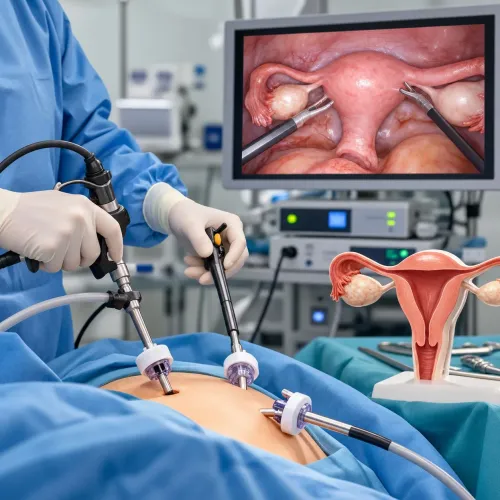
The camera’s route determines the operation: laparoscopy examines the pelvis, while hysteroscopy examines the inside of the uterus.
| Procedure | What it examines or treats | When it matches the problem |
|---|---|---|
| Diagnostic laparoscopy | Uterus, ovaries, fallopian tubes and pelvic lining through small abdominal incisions | Suspected endometriosis, adhesions, tubal damage or pelvic disease |
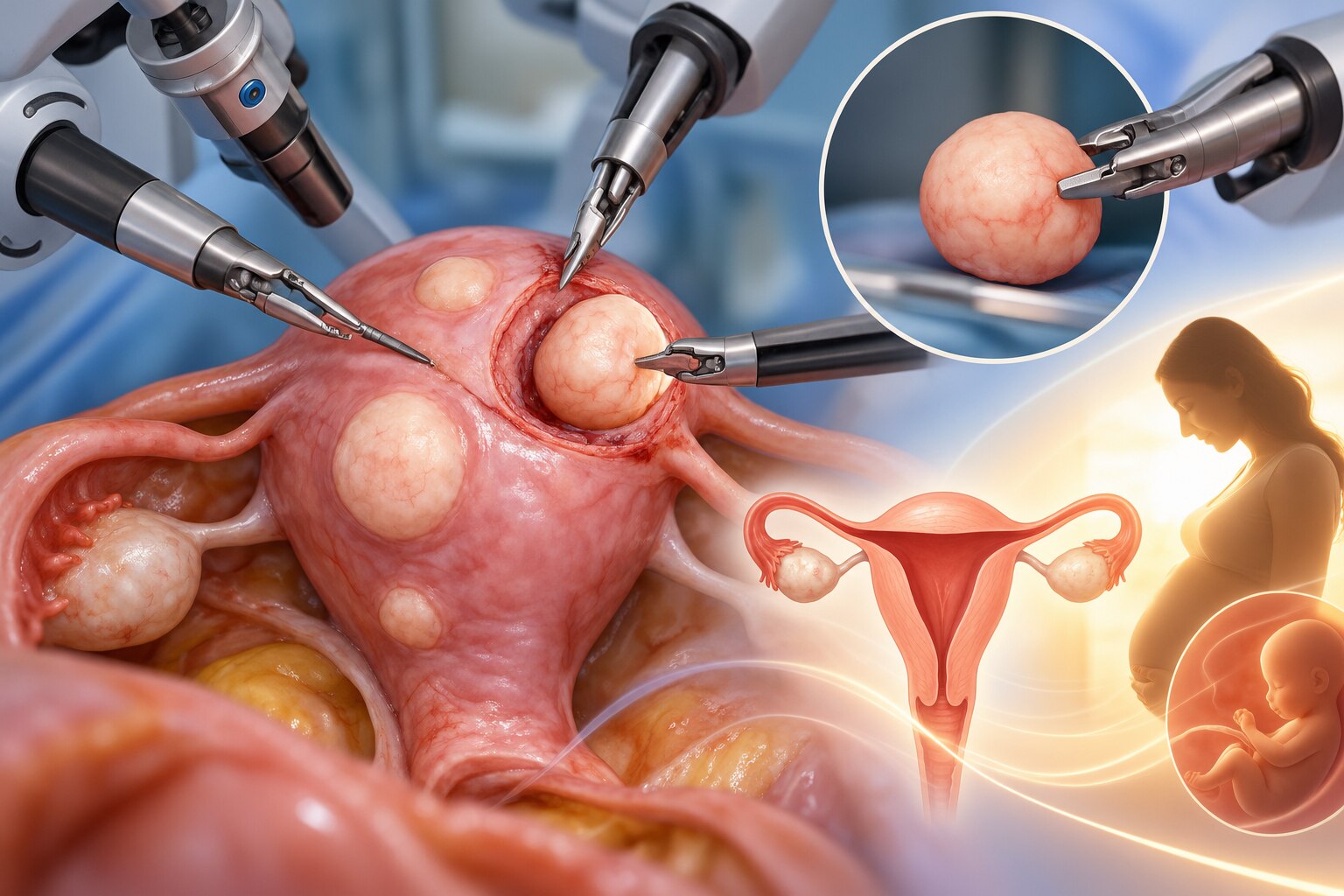
| Operative laparoscopy | Endometriosis, adhesions, selected ovarian cysts and some fibroids | When treatment can restore anatomy or preserve reproductive organs |
| Hysteroscopy | Uterine cavity through the vagina and cervix, without abdominal incisions | Endometrial polyp, submucosal fibroid, intrauterine adhesion or uterine septum |
| Laparoscopic myomectomy | Fibroid within the uterine muscle or on its outer surface | When the fibroid is judged to affect fertility or pregnancy |
During operative laparoscopy, the surgeon can remove endometriosis, divide adhesions, assess tubal damage or excise a selected cyst. Ovarian surgery should spare healthy tissue whenever safely possible, because excessive tissue removal can reduce ovarian reserve.
Tubal reconstruction suits selected blockages with limited damage, a useful remaining tube and a reasonable chance of tubal function. Hydrosalpinx requires a different decision: if the tube communicates with the uterus, removing it or blocking it before IVF can protect treatment success, while reconstruction may be unsuitable.
Endoscopic fertility surgery is therefore matched to the anatomy, not simply the infertility label. Fertility preserving surgery in Bangalore should aim to retain the uterus, ovarian tissue and useful tubal function when that approach is safe and clinically worthwhile.
What can surgery improve, and what does it preserve?
Benefit depends on the diagnosis and your treatment goal. Treating endometriosis or pelvic adhesions can restore pelvic anatomy and support natural conception in selected patients; it does not automatically improve IVF outcomes.
The trade-offs matter most with ovarian surgery. Removing an endometrioma can make the ovary easier to reach, but cystectomy can remove healthy tissue and lower anti-Müllerian hormone or antral follicle count, especially after bilateral or repeat surgery. Discuss ovarian-sparing treatment and egg or embryo freezing before operating when reserve or time is a concern.
- Myomectomy can preserve the uterus when a fibroid distorts the uterine cavity. Surgery for a fibroid that leaves the cavity unaffected has a less certain fertility benefit and can cause adhesions or delay conception.
- Hysteroscopic treatment can improve the uterine environment when a polyp, submucosal fibroid, intrauterine adhesion or septum is relevant. It treats the cavity without abdominal incisions.
- Tubal surgery can support natural conception after selected blockages with limited damage, but it creates a future ectopic-pregnancy risk. Hydrosalpinx or advanced tubal damage often requires a different plan, including IVF.
Fertility-enhancing surgery in Bangalore is less likely to overcome severely reduced ovarian reserve, absent ovulation, severe male-factor infertility or infertility driven mainly by advanced tubal damage. Treating an unrelated structural finding will not remove the main barrier. Fertility-preserving surgery in Bangalore aims to retain useful ovarian tissue, the uterus and tubal function where safely possible.
Which tests decide whether surgery or fertility treatment comes first?
A complete fertility assessment—not an ultrasound report alone—decides whether surgery or fertility treatment comes first. Pelvic ultrasound evaluates the uterus, ovaries, fibroids, cysts and signs of endometriosis. Anti-Müllerian hormone and antral follicle count help predict response to stimulation, but neither diagnoses infertility nor predicts natural conception by itself.
Semen analysis checks sperm concentration, movement and shape. Menstrual history, progesterone testing or another clinical assessment helps establish whether ovulation occurs. Hysterosalpingography or HyCoSy shows the uterine outline and whether the fallopian tubes are open. Hysteroscopy is reserved for symptoms or imaging that suggest a cavity lesion.
| Finding | Treatment that may come first | Why |
|---|---|---|
| Regular ovulation, open tubes, no major structural problem | Timed intercourse or ovulation induction | Medication may address ovulation without surgery |
| At least one functional tube and mild semen abnormality | Intrauterine insemination | Sperm is placed beyond the cervix |
| Severe tubal disease, hydrosalpinx, low reserve or severe male-factor infertility | IVF | It may avoid damaged tubes and save time |
| Hydrosalpinx or a lesion interfering with IVF | Surgery combined with IVF | Treating the finding can support treatment |
Diagnostic laparoscopy is not a routine first-line test because it carries operative risks. A reproductive surgery specialist may recommend it when symptoms or earlier tests suggest endometriosis, adhesions, previous pelvic infection or tubal disease.
The decision about who can benefit from fertility enhancing surgery in Bangalore depends on the diagnosis, age, ovarian reserve and partner’s results—not location or one scan.
How should you weigh the surgeon, risks and timing in Bangalore?
Choose a reproductive surgery specialist who quantifies the expected fertility gain, compares alternatives and explains the consequence of waiting. Ask for pregnancy or live-birth expectations relevant to your diagnosis, not a promise based only on the word minimally invasive.
| Option | Main advantage | Key trade-off |
|---|---|---|
| Surgery | Corrects a structural barrier or preserves anatomy | Recovery, complications and possible loss of ovarian tissue |
| IVF | Bypasses damaged tubes and saves time | Ovarian stimulation, procedures and no guaranteed pregnancy |
| Waiting or non-surgical treatment | Avoids operative risk | Age-related decline and progression of disease |
Ask whether the procedure is diagnostic or operative, which organ will be preserved, how anti-Müllerian hormone or antral follicle count could change, and whether IVF would produce a better result for your age and ovarian reserve.
Discuss bleeding, infection, anaesthetic complications, adhesions, recurrent disease and injury to the bowel, bladder, ureter or blood vessels. Previous pelvic operations and dense adhesions increase complexity, and laparoscopy can require conversion to open surgery.
Recovery consumes time that may be more valuable when IVF is time-sensitive. After tubal reconstruction, arrange an early ultrasound in pregnancy to confirm implantation inside the uterus because ectopic pregnancy is a recognised risk.
Fertility-preserving surgery in Bangalore for benign disease usually aims to retain the uterus, ovarian tissue and useful tubal function. Suspected cancer is different: cancer control takes priority, and fertility-sparing treatment needs multidisciplinary assessment. Dr Rajani vaidya can help organise these decisions around your results and reproductive goals.
Related services
Fertility-Enhancing Endoscopic Surgery Fertility-Enhancing Endoscopic Surgery For couples facing the challenges of infertility, advanced medical techniques now offer renewed hope. View service → |
Laparoscopic Hysterectomy Dr. Rajani Vaidya, a leading Gynaecologist and Laparoscopic Surgeon, offers expertise in performing laparoscopic hysterectomy, a minimally invasive... View service → |
Frequently asked questions
Which fertility problems can endoscopic surgery address?
It can address uterine polyps, some fibroids, scar tissue, endometriosis, pelvic adhesions and selected tubal blockages that interfere with conception or implantation.
Which endoscopic procedure matches the fertility problem?
Hysteroscopy examines and treats the inside of the uterus. Laparoscopy examines and treats the pelvis, ovaries, fallopian tubes and external surface of the uterus.
What can surgery improve, and what does it preserve?
Surgery can restore pelvic anatomy, remove implantation obstacles and relieve disease-related distortion. Fertility-preserving planning aims to protect healthy ovarian tissue, tubal function and the uterus.
Which tests decide whether surgery or fertility treatment comes first?
Doctors use ovarian-reserve tests, ultrasound, semen analysis, tubal-patency testing and, when indicated, hysteroscopy or diagnostic laparoscopy to choose the sequence.
How should you weigh the surgeon, risks and timing in Bangalore?
Ask about the surgeon’s reproductive surgery experience, expected benefit, risks to ovarian or tubal function, recovery period, alternatives and how surgery changes the timing of pregnancy treatment.
Related service
Laparoscopic Ovarian Cyst Removal Laparoscopic Ovarian Cyst Removal Ovarian cysts are fluid-filled sacs that develop on or inside an ovary. View service → |
Keywords