Puberty brings visible changes, new menstrual patterns and health questions that are not always easy to sort at home. You will learn what to expect, which symptoms need prompt assessment, how an adolescent gynaecology visit works, and how care can address reproductive, sexual and emotional health together.
Key takeaways
- Early periods can be irregular while menstrual cycles mature.
- Seek assessment for severe pain, very heavy bleeding or prolonged gaps.
- Record period dates, symptoms, medicines and questions before the appointment.
- Care should cover periods, pain, contraception, sexual health, screening and wellbeing.
Which puberty changes are normal, and what should periods look like?
Normal puberty changes include breast development, pubic and underarm hair, growth spurts and changes in body shape. Body odour and acne risk appears in puberty as sweat and oil glands become more active. Mood changes and appetite shifts also occur as hormones fluctuate.
Vaginal discharge can be normal when it is clear or white and not accompanied by a strong smell, itching or pain.
| Pattern | Usually expected | Needs assessment |
|---|---|---|
| First cycles | Irregular timing during the first few years; cycles often 21–45 days apart | A gap of 90 days or more, even once, or periods less than 21 or more than 45 days apart |
| Bleeding | About 2–7 days, with flow that gradually becomes familiar | Bleeding for more than 7 days, or soaking a pad or tampon every 1–2 hours |
| Pain | Cramps that improve with appropriate treatment and do not stop normal activities | Pain that repeatedly disrupts school, sleep, sport or daily life |
| Menstrual start | Periods commonly begin around ages 10–15 | No period by age 15, or no breast development by 13 |
Seek prompt medical care for fainting, severe weakness, suspected pregnancy, or rapidly worsening symptoms. New symptoms deserve attention rather than being dismissed as puberty. Repeated disabling pain is not something every adolescent must tolerate; if suitable treatment has not helped within 3–6 months, conditions such as endometriosis need consideration.
When do irregular periods or pain need medical assessment?
Medical assessment is needed when bleeding exceeds ordinary early-cycle variation: heavy menstrual bleeding, soaking a pad every one to two hours for several hours, bleeding beyond seven days, a gap of 90 days even once, or cycles repeatedly shorter than 21 days or longer than 45 days.
Record each menstrual cycle length from the first period onward.
| Symptom | Possible explanation | Why assessment matters |
|---|---|---|
| Heavy or prolonged bleeding | Anovulatory cycles, a bleeding disorder, thyroid disease or PCOS | About one in five adolescents with heavy menstrual bleeding has an underlying bleeding disorder; a blood count, ferritin and targeted clotting tests may be needed |
| Long gaps or infrequent periods | PCOS, thyroid disease, low energy intake, an eating disorder or excessive exercise | Ongoing hormone disruption can affect bone health and expose another illness |
| Missed period with nausea, pelvic pain or abnormal bleeding | Pregnancy, including ectopic pregnancy | Take a pregnancy test whenever pregnancy is biologically possible, even if sexual history is not volunteered |
| Pain that worsens or persists | Primary dysmenorrhea, endometriosis or another pelvic condition | Repeated pain that does not improve after three to six months of appropriate treatment needs reassessment |
Seek urgent help for fainting, weakness, severe pain, possible pregnancy, or bleeding that makes normal activity unsafe. Pain that repeatedly stops school, sleep, sport or daily activities needs assessment; do not dismiss it as something every adolescent must tolerate.
How should you prepare for an adolescent gynaecology appointment?
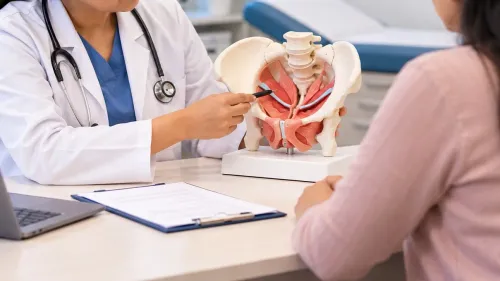
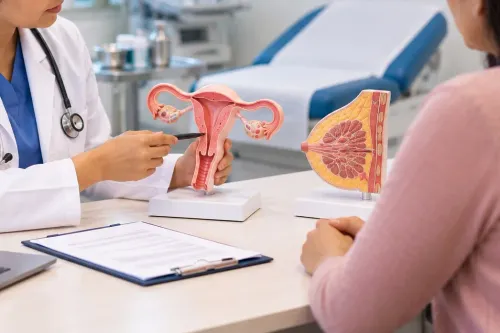
An adolescent gynaecology consultation begins with questions, not automatically with an examination. The clinician will ask about the first-period date, cycle dates and bleeding duration, number of pads or tampons, clots, pain score and missed school days.
Before attending, note these details and bring information about:
- Medicines, allergies and supplements
- Exercise, nutrition and recent weight changes
- Family history of PCOS, thyroid disease or bleeding disorders
- Fainting, fatigue, acne, unwanted hair growth or other concerns
A parent or guardian can attend when the adolescent wants support. A confidential consultation also includes private time with the clinician, allowing sensitive questions about safety, sexual health and mental health. The adolescent can ask what will happen before agreeing to any examination or test.
| Assessment | What it can clarify | When it may be needed |
|---|---|---|
| Abdominal or external assessment | Tenderness, skin changes or signs of hormonal conditions | Pain, unusual bleeding or discharge |
| Urine or blood tests | Pregnancy, anaemia, iron deficiency, thyroid or hormone problems | Missed periods, heavy bleeding, fatigue or pain |
| Complete blood count and ferritin | Blood loss and depleted iron stores | Heavy or prolonged bleeding |
| Bleeding-disorder evaluation | A clotting problem | Easy bruising, nosebleeds or heavy periods from the beginning |
| Transabdominal ultrasound | Uterus, ovaries or an ovarian mass | Persistent pain, abnormal bleeding or a suspected structural problem |
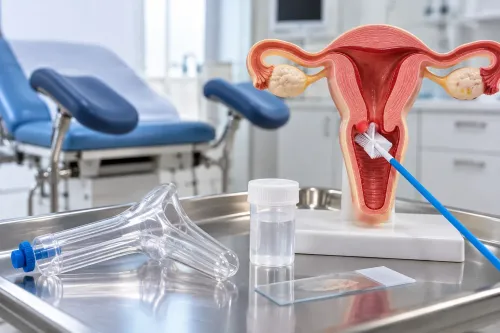
A pelvic examination is not automatic. Internal examination or ultrasound is chosen only when indicated, explained and consented; a pregnancy test is included when biologically relevant.
What changing health needs should adolescent care include?
Adolescent care should include adolescent sexual health, contraception counselling, sexually transmitted infection prevention, vaccination, nutrition and mental health—not periods alone. Confidential care matters: explain who can access records, offer private time, and assess consent, safety, coercion and safeguarding.
- Include condoms even when another contraceptive method is chosen. Hormonal contraception and intrauterine devices prevent pregnancy but do not prevent sexually transmitted infections.
- Choose a method according to consent, privacy, bleeding preferences, adherence, drug interactions and personal choice—not age alone.
- Check HPV vaccination status. HPV vaccination prevents new infection but does not clear existing HPV or treat cervical lesions. Cervical screening still begins at the nationally recommended age, not simply when sexual activity starts.
- Review food intake, growth, iron-rich foods and possible disordered eating. Ask privately about anxiety, depression, self-harm, bullying, abuse, sleep and substance use.
If pregnancy is biologically possible, missed periods, pelvic pain, nausea or abnormal bleeding require a pregnancy test, even when sexual history is not volunteered. Adolescent pregnancy needs prompt antenatal, nutritional, mental-health and safeguarding support, alongside confidential care that protects safety and dignity.
Which treatments help, and when is specialist care needed?
Painful periods treatment usually starts with heat therapy and clinician-approved anti-inflammatory medicines. Dosing must match the adolescent’s age, weight and medicine formulation, after checking allergies, asthma, kidney disease, ulcers and other risks. Avoid aspirin during viral illness in children and adolescents because of Reye syndrome risk.
Irregular periods treatment depends on the cause, not an ultrasound label. A clinician should assess anaemia and the cause of bleeding before iron is started, including whether iron deficiency is present. Hormonal therapy can reduce heavy bleeding or pain, but the choice should reflect medical history, contraindications, bleeding goals and the adolescent’s preferences.
| Concern | Appropriate next step | Why it matters |
|---|---|---|
| Pain repeatedly disrupts school, sleep, sport or daily activity | Specialist evaluation after appropriate treatment | Persistent pain raises concern for endometriosis, especially without improvement after 3–6 months |
| Persistent cycle problems with acne, excess facial hair or biochemical androgen excess | PCOS evaluation | PCOS should be diagnosed only after persistent ovulatory dysfunction and androgen excess are confirmed and other causes excluded; ultrasound appearance alone is insufficient |
| Sudden severe one-sided pelvic pain, vomiting or collapse | Emergency assessment | Ovarian torsion can threaten ovarian blood supply |
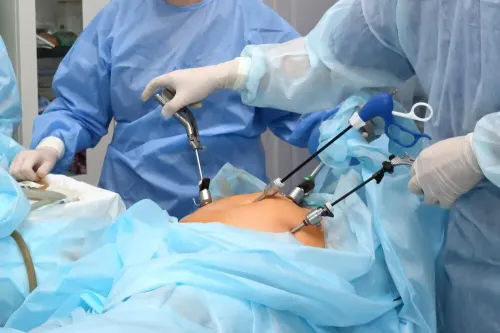
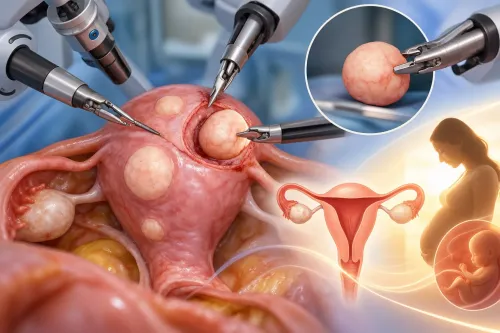
| Persistent ovarian mass or suspected endometriosis | Discuss laparoscopy | Laparoscopy needs a defined diagnostic or treatment question, since anaesthesia, bleeding, infection, organ injury and venous thromboembolism remain possible |
Dr Rajani vaidya can help coordinate specialist evaluation when symptoms persist or fertility-preserving treatment matters. Laparoscopy is not the automatic next step for unexplained pelvic pain.
Frequently asked questions
Which puberty changes are normal, and what should periods look like?
Breast development, pubic and underarm hair, growth spurts, body-shape changes, body odour, acne, mood changes and appetite shifts are common puberty changes. Periods can be irregular during the first few years, but track cycle dates, bleeding duration and symptoms.
When do irregular periods or pain need medical assessment?
Arrange medical assessment for severe or worsening pain, bleeding that soaks pads rapidly, periods lasting more than seven days, fainting, persistent fatigue, or long gaps between periods. Seek urgent care for severe pain with heavy bleeding, dizziness or possible pregnancy.
How should you prepare for an adolescent gynaecology appointment?
Record the first day of each period, cycle length, bleeding pattern, pain severity, medicines, medical conditions and family history. Bring questions and, when appropriate, a trusted adult; the clinician can explain confidentiality and examination steps.
What changing health needs should adolescent care include?
Adolescent care can address menstrual health, pain, acne, contraception, sexual health, pregnancy concerns, vaccinations, screening, nutrition, exercise, mental wellbeing and privacy. The appropriate discussion depends on the adolescent’s age, symptoms and concerns.
Which treatments help, and when is specialist care needed?
Treatment depends on the cause and may include symptom relief, cycle management, iron assessment or treatment for conditions such as endometriosis, thyroid disorders or polycystic ovary syndrome. Specialist care is appropriate when symptoms are severe, persistent, unexplained or affect school, sleep or daily activities.