Irregular periods, hot flushes, poor sleep, vaginal discomfort and mood changes do not all require the same explanation or treatment. You will learn how menopause is identified, which options fit different medical histories, what to ask a Bangalore clinic and how follow-up keeps care safe and useful.
Key takeaways
- Menopause follows 12 consecutive months without a period; pregnancy remains possible during perimenopause.
- Record bleeding changes, hot flushes, sleep, mood, vaginal and urinary symptoms before your consultation.
- Compare hormone therapy, local treatment and non-hormonal options against your symptoms and medical history.
- Ask how treatment will be monitored and when your follow-up review should occur.
Perimenopause, menopause and the symptoms worth assessing
Perimenopause versus menopause is the difference between transition and diagnosis. During perimenopause, ovulation becomes irregular, bleeding patterns change, and pregnancy remains possible. Menopause is diagnosed retrospectively after 12 consecutive months without a period.
Menopause symptoms include hot flushes, night sweats, disrupted sleep, mood changes, anxiety, brain fog, reduced libido, joint aches, vaginal dryness, painful sex, urinary urgency and recurrent urinary symptoms. Discuss sexual health in terms of comfort, desire and your personal goals; partnered sex is not assumed, and low libido is not inevitable.
Menopause care is not fertility care, but contraception remains relevant while ovulation can continue.
| Situation | What is happening | Why assessment matters |
|---|---|---|
| Natural menopause | Ovarian hormone production declines gradually | Symptoms and bleeding changes guide care |
| Removal of both ovaries | Estrogen falls abruptly, causing surgical menopause | Bone, cardiovascular and symptom risks need planning |
| Hysterectomy | Periods cannot show when menopause begins | Symptoms and ovarian history become more important |
| Cancer treatment | Chemotherapy, radiotherapy or other treatment may stop ovarian function | Fertility, bone health and hormone options need specialist review |
Seek urgent medical assessment for heavy bleeding, bleeding after 12 months without periods, chest pain, sudden breathlessness, one-sided weakness or a new breast lump. Painful sex, persistent urinary symptoms, severe sleep disruption or distressing mood changes also deserve a clinical review rather than self-treatment.
What a personalized first menopause consultation includes
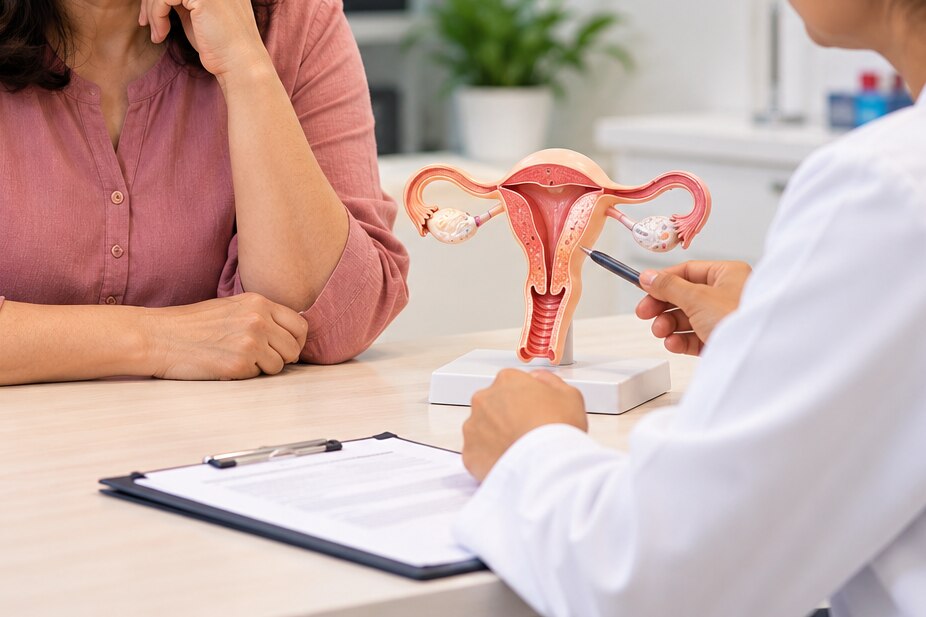
A clinician chooses tests and treatment by matching your symptoms with your risks, not by ordering every hormone panel. Expect review of menstrual, pregnancy, hysterectomy, ovary-removal and cancer-treatment history; current medicines, contraception and supplements; and symptom timing, severity and effect on sleep or daily life.
The assessment includes blood pressure, weight or waist measurement, smoking, migraine, diabetes, hypertension, clotting and cardiovascular history, plus personal and family history of breast cancer, osteoporosis and fractures.
At age 45 or older, typical symptoms usually support a clinical menopause diagnosis without routine FSH testing or estradiol testing. Hormonal contraception can hide bleeding patterns. FSH testing has a narrower role when menopause is suspected at 40–45 or premature ovarian insufficiency is suspected under 40.
| Situation | Test or assessment | Reason |
|---|---|---|
| Typical symptoms, age 45+ | No routine FSH or estradiol | Hormone levels fluctuate and rarely clarify the diagnosis |
| Possible thyroid disease, pregnancy, anemia, medication effect, sleep disorder, depression, anxiety or diabetes | Thyroid test, pregnancy test, or complete blood count | Investigates non-menopause causes of symptoms or bleeding |
| Premature menopause, bilateral ovary removal, fracture risk or relevant age | Bone-density scan | Targets elevated risk rather than every patient |
| Unexpected bleeding | Examination and directed investigation | Menopause treatment must not replace assessment of bleeding causes |
Choosing between hormone therapy, local treatment and non-hormonal care
Systemic menopausal hormone therapy is the most effective treatment for hot flushes and night sweats, but your uterus status, symptom pattern and medical risks determine whether it fits.
| Option | Best match | Key point |
|---|---|---|
| Systemic menopausal hormone therapy | Hot flushes, night sweats and related sleep disruption | An intact uterus generally needs combined estrogen-progestogen therapy to protect the endometrium. Estrogen-only therapy is generally considered after total hysterectomy, but endometriosis and other surgical details can change the decision. |
| Local vaginal estrogen | Dryness, burning, painful sex, urinary urgency or recurrent urinary symptoms | It has minimal systemic absorption, usually needs no added progestogen and can remain necessary after hot flushes improve. |
| Non-hormonal care | When hormones are unsuitable or unwanted | Cognitive behavioural therapy, sleep treatment and selected non-hormonal medicines can help. Exercise, trigger management and a regular sleep routine support symptom control but may not match hormone therapy’s effectiveness. |
Transdermal estrogen may be considered when venous-thromboembolism risk concerns the clinician, although it is not risk-free. Do not start hormones without assessment if you have unexplained bleeding, current or previous breast cancer, an estrogen-sensitive cancer, active liver disease, previous clots or stroke, or significant cardiovascular risk.
Ask about the exact estrogen, progestogen, route and review plan. Compounded or unregulated hormones are not safer defaults. Supplements and herbal products can interact with medicines and have inconsistent evidence; “natural” does not mean proven or risk-free.
Finding suitable menopause care in Bangalore
Before booking menopause care in Bangalore, check who will assess you, how red-flag symptoms will be handled, and how follow-up works.
1. Ask whether a gynecologist performs the assessment. Abnormal bleeding should be investigated with examination and, when indicated, pelvic ultrasound, endometrial sampling or hysteroscopy before hormone treatment. Ask who arranges referrals.
2. Ask how treatment is reviewed, when the next appointment occurs, and what happens if symptoms do not improve. Confirm whether follow-up appointments are available, whether privacy and language preferences can be accommodated, and whether prescribed medicines and investigations are accessible near you.
3. Ask whether teleconsultation menopause care is appropriate for your concern. A video appointment can suit symptom review or medicine follow-up, but bleeding, a new breast lump, severe pelvic symptoms or examination needs require in-person care.
4. Ask how personalized menopause support connects your age at menopause, time since the last period, migraine, smoking, diabetes, blood pressure, clot risk, family history, uterus status and treatment goals. One standard prescription cannot account for these differences.
A gynecologist is usually the right first contact. Care may also include an endocrinologist for thyroid or metabolic conditions, a breast specialist for breast findings or cancer history, a pelvic-floor physiotherapist for urinary or sexual symptoms, a mental-health professional for significant anxiety or depression, or a primary-care clinician for broader cardiovascular and diabetes care.
Dr Rajani vaidya can be considered by readers searching for a gynecologist Bangalore service, provided they confirm consultation scope, referral pathways and follow-up arrangements before booking.
Related service
Adolescent and Menopausal Care Adolescent and Menopausal Care A woman’s life is defined by a series of natural but significant hormonal transitions. View service → |
What safe follow-up looks like after treatment starts
Treatment is working when the symptoms targeted in your plan improve without troublesome side effects, and the treatment still fits your health risks and priorities. It relieves selected symptoms; it does not prevent every chronic illness or guarantee permanent resolution.
Keep a symptom and bleeding diary before each menopause treatment follow-up. Record hot flushes, sleep, mood, vaginal and urinary symptoms, sexual comfort and bleeding, including dates and flow. Bring every medicine and supplement, previous reports and blood-pressure readings if available.
At each menopause safety review, discuss:
- Symptom control, side effects and treatment tolerance
- Blood pressure, new illnesses, breast concerns and changes in clot or cardiovascular risk
- Whether the dose, delivery route or treatment type still suits your goals
- Whether another diagnosis could explain persistent fatigue, palpitations, sleep, mood or bleeding symptoms
Book a review after starting or changing therapy, then periodically, commonly at least annually. Treatment duration has no universal maximum; decide it through shared decision-making, balancing benefits, risks and preferences. Coordinated care can identify another diagnosis and adjust treatment.
Waiting for symptoms to pass, self-medicating with over-the-counter products or addressing only one symptom can leave bleeding, bone, cardiovascular, mental-health or sexual-health needs unaddressed. Seek prompt evaluation for postmenopausal bleeding, chest pain, sudden breathlessness, one-sided weakness or a new breast lump.
Frequently asked questions
What is the difference between perimenopause and menopause?
Perimenopause is the transition when ovulation and bleeding become irregular. Menopause is diagnosed after 12 consecutive months without a period.
What happens during a personalized first menopause consultation?
The consultation reviews your bleeding pattern, symptoms, medical history, medicines, pregnancy possibility and treatment goals before discussing suitable care.
How do you choose between hormone therapy, local treatment and non-hormonal care?
The choice depends on which symptoms need treatment, your health history, contraindications and whether you need whole-body or local relief.
What should follow-up include after menopause treatment starts?
Follow-up checks symptom response, side effects, bleeding changes and whether the treatment remains appropriate, with adjustments when needed.