The first step is not automatically hysterectomy, a front-wall repair or a continence procedure. You will be able to understand how clinicians map each prolapsed compartment, decide whether the uterus needs removal, and choose between combined, staged and non-surgical treatment.
Key takeaways
- Map every prolapsed compartment before choosing an operation.
- Hysterectomy does not automatically come before vaginal-wall repair.
- Urinary and bowel findings can change the surgical plan.
- Exercises, a pessary or postponement may suit some patients better.
The examination comes before the operation order
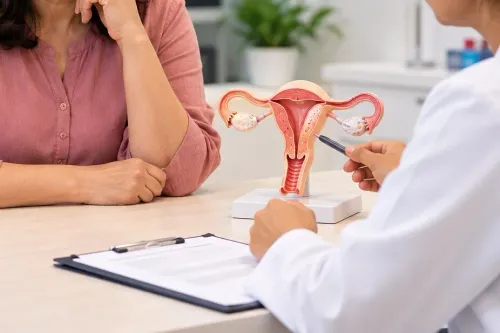
Clinicians decide the operation order by mapping every prolapsed compartment before discussing hysterectomy or vaginal-wall repair. A pelvic organ prolapse assessment records anterior, posterior and apical support, often with a POP-Q examination while you strain, stand and empty your bladder.
The examiner also matches each finding to your symptoms rather than treating the most visible bulge.
- Uterine or apical prolapse: descent of the cervix, uterus or vaginal apex determines whether apical suspension must anchor the repair.
- Cystocele: prolapse of the front vaginal wall can affect bladder position, emptying and stress leakage.
- Rectocele: prolapse of the back wall does not prove that the bulge causes difficult bowel movements. Constipation, obstructed defecation, pelvic-floor coordination and rectal prolapse need separate assessment before posterior-wall surgery.
| Structure | What the examination checks | How it affects planning |
|---|---|---|
| Uterus or vaginal apex | Cervix or apex descent during straining | Support the apex as part of repair; consider uterine preservation or hysterectomy for a separate indication |
| Cystocele | Anterior-wall descent and bladder-emptying symptoms | Add anterior repair only when findings and symptoms support it |
| Rectocele | Posterior-wall bulge, evacuation mechanics and rectal findings | Treat stool consistency or coordination instead of operating on anatomy alone when appropriate |
| Multiple compartments | Front, back and apical support together | Address significant apical weakness rather than repairing only the cystocele or rectocele |
The examination also records sexual symptoms, urinary leakage, bowel symptoms, future pregnancy plans and medical risks. Those details determine whether surgery is needed, whether procedures belong in one operation, and which structure requires attention first.
Does hysterectomy come before the vaginal wall repair?
Hysterectomy is not automatically the first or necessary step. Hysterectomy for prolapse is chosen when the uterus has severe descent, abnormal bleeding, uterine disease, or the patient prefers removal after discussing alternatives. Removing the uterus alone does not repair lost apical support and can leave the vaginal vault prone to prolapse.
1. Map the compartments before operating. Confirm whether the main problem is uterine prolapse, vaginal-apex descent, cystocele, rectocele, or several together. Do not repair only the most visible bulge while significant apical descent remains; untreated apex support increases persistence and recurrence.
2. Decide whether the uterus can remain. A uterine-preserving apical suspension can support the uterus through ligament fixation or another suspension technique. This option deserves discussion when there is no uterine disease and the patient wants to retain the uterus, particularly if future pregnancy matters.
Definitive repair is usually postponed until childbearing is complete because pregnancy and vaginal birth can weaken the result.
3. Build the operation around the apex. If hysterectomy is performed, surgeons commonly remove the uterus and then secure vaginal apex support during the same operation. They can then repair the front wall for cystocele and the back wall for rectocele, although the exact order varies with access, anatomy and technique.
Posterior repair is not automatic: constipation, obstructed defecation, pelvic-floor coordination and rectal prolapse need assessment before operating on a bulge.
Urinary and bowel findings can change the repair plan
Stress urinary incontinence changes the consent discussion, not automatically the order of surgery. A prolapse can kink the urethra and hide leakage; a prolapse-reduction stress test may reveal it before repair.
If stress leakage is clear, prolapse repair and a sling can be done together, but staging is sensible when the diagnosis is uncertain or avoiding added risk matters. A sling lowers postoperative leakage risk but raises temporary voiding difficulty and urinary infection risk.
Urgency incontinence is different: repairing the bulge does not reliably cure the sudden urge to void. Clinicians may treat bladder irritation or overactive bladder separately and review symptoms after prolapse repair rather than add a continence procedure that targets stress leakage.
Bladder emptying assessment matters before fixing the prolapse. A high residual urine volume, weak stream or obstruction from the prolapse can favour correcting support first and checking emptying again; adding a sling before confirming satisfactory emptying can worsen retention.
Bowel symptoms also influence whether a posterior repair belongs in the same operation. The plan separates structural symptoms from bowel habits:
- A rectocele with splinting or incomplete evacuation may support posterior repair alongside other needed repairs.
- Constipation, straining or pelvic-floor coordination problems need treatment because surgery will not correct the underlying habit.
- Unclear symptoms favour staged treatment, so persistent bowel trouble is not wrongly attributed to a successful prolapse repair.
When exercises, a pessary or postponement make more sense
An operation is not automatically the best first step. For symptomatic prolapse that does not extend more than 1 cm beyond the hymen, supervised pelvic floor muscle training for 16 weeks is a reasonable starting point. Improvement can reduce pressure and bulging symptoms without exposing you to surgical risks.
A vaginal pessary can be offered at any stage of prolapse. It supports the vaginal walls while you decide about surgery, during pregnancy planning, or when an operation is unsafe. Vaginal pessary fitting and follow-up matter: discharge, bleeding, ulceration and expulsion need review, while a neglected pessary can cause serious injury.
Postponement makes sense when:
- You plan a future pregnancy after prolapse repair. Pregnancy and vaginal birth can strain the repair, so definitive surgery is usually delayed until childbearing is complete. If delay is impossible, discuss recurrence and delivery planning before consenting.
- Your symptoms are mild, your prolapse is stable, or exercises and a pessary provide acceptable relief.
- Heart, lung or other medical problems make anaesthesia or recovery unusually risky. Treating those conditions first can make later surgery safer.
- You have prolapse emergency symptoms, such as severe pain, heavy bleeding, fever, inability to pass urine, or a trapped bulge that cannot be pushed back. Seek urgent assessment rather than arranging routine repair.
A pessary is not a cure, and exercises cannot correct every prolapse. Reassess if symptoms worsen, urination becomes difficult, or support no longer controls daily discomfort.
Choosing the operation means weighing repair, recurrence and risk
The operation should match the prolapse pattern, your health, previous operations and priorities—not simply the most extensive repair. Compare how well each approach supports the vaginal apex, the chance of recurrence, recovery time, mesh-related risks, and whether urinary, bowel or sexual symptoms will remain.
| Option | Main trade-off | Discuss when |
|---|---|---|
| Native-tissue repair | Uses your own vaginal tissues and avoids permanent abdominal mesh, but recurrence can be higher, especially with extensive or recurrent prolapse. | Suitable for selected uterine, anterior or posterior prolapse, including some vaginal vault prolapse. |
| Laparoscopic or abdominal sacrocolpopexy | Attaches the vagina or cervix to the sacrum with mesh and provides durable apical support, but involves abdominal surgery and mesh complications. | Consider for advanced, recurrent or multi-compartment prolapse when you are medically fit and accept abdominal mesh. |
| Staged treatment | Limits the first operation and clarifies which symptoms improve, but requires another procedure if the remaining problem persists. | Useful when stress incontinence is uncertain, bowel or bladder symptoms need separate assessment, or surgical risk is high. |
Ask whether the proposed mesh is abdominal mesh or transvaginal mesh for prolapse; they are not the same. In the United States, manufacturers were ordered to stop selling transvaginal mesh for prolapse in 2019, while abdominal sacrocolpopexy mesh remained distinct.
A consultation with Dr Rajani vaidya should leave you knowing the planned repair, expected recurrence risk and fallback plan.
Before consenting, ask:
- Will the operation support the apex as well as repair the vaginal wall?
- What symptoms could persist or newly appear, including urinary incontinence?
- How would a future pregnancy, sexual activity or bowel symptoms affect the choice?
Related service
Vaginal Hysterectomy + Pelvic Floor Repair Vaginal Hysterectomy + Pelvic Floor Repair Many women experience pelvic health issues such as uterine prolapse, urinary incontinence, or vaginal laxity—often due to childbirth, aging, or... View service → |
Frequently asked questions
What examination comes before pelvic floor repair?
A clinician maps anterior, posterior and apical support with a pelvic organ prolapse assessment, often using POP-Q measurements while you strain, stand and empty your bladder.
Does hysterectomy come before vaginal-wall repair?
Not automatically. The operation order depends on the prolapsed compartments, uterine support, symptoms and the repair plan.
Can urinary and bowel findings change the repair plan?
Yes. Urinary leakage, difficulty emptying the bladder, constipation and bowel emptying problems can affect which compartments need treatment and how surgery is planned.
When might exercises or a pessary make more sense than surgery?
Pelvic-floor exercises or a pessary may be suitable when symptoms are manageable, you want to delay surgery, pregnancy is planned or surgical risk needs to be reduced. Postponement may also be appropriate when symptoms do not justify an operation.